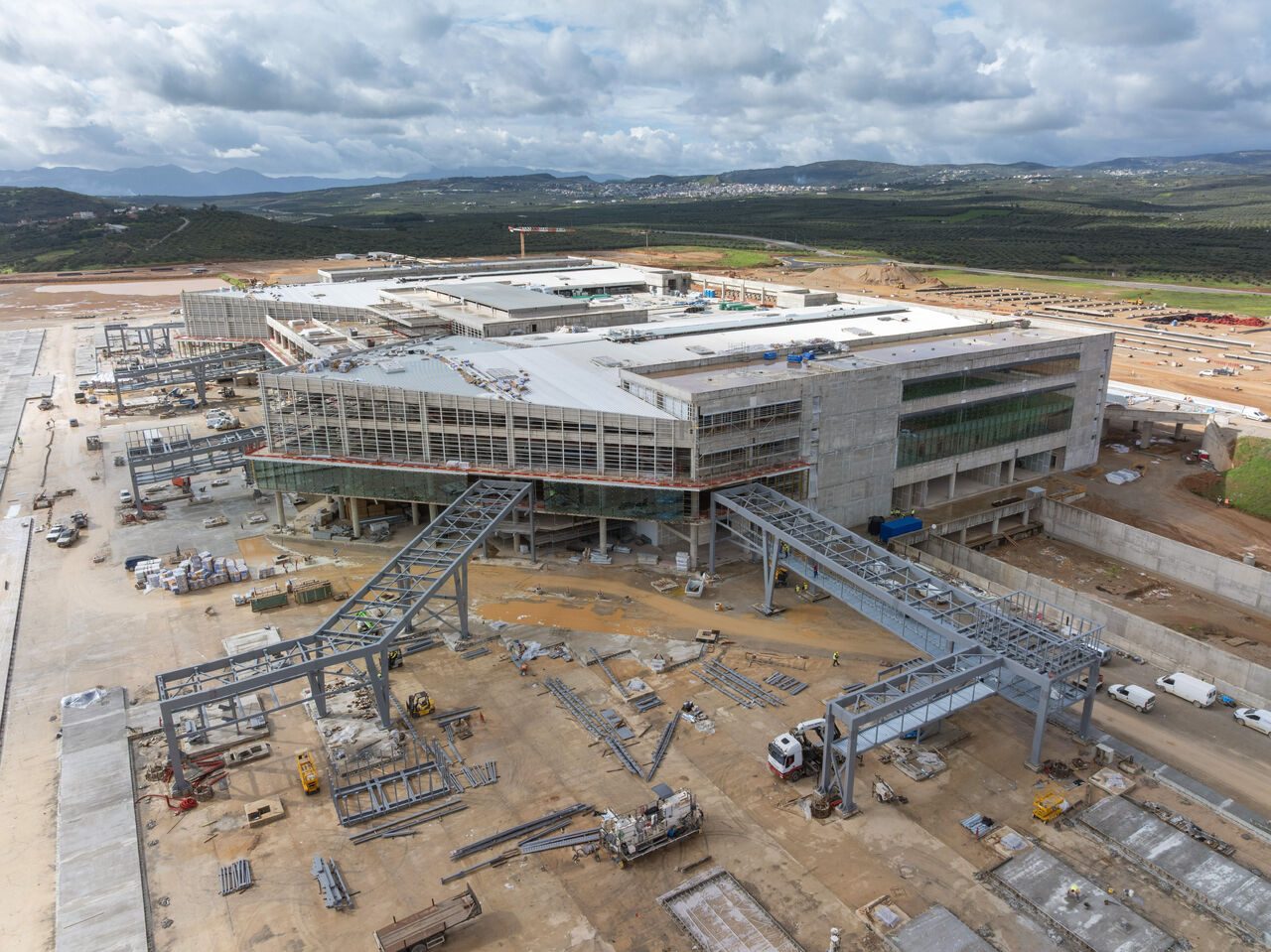
Project team
- Concessionaire: Heraklion Crete International Airport S.A. (Greek State, GEK TERNA, GMR Airports)
- Contracting Authority: Hellenic Ministry of Infrastructure and Transport
- Constructor: TERNA S.A.
- Lead Designer: INECO
- Structural Design (all building works): Joint venture Penelis Consulting Engineers – Concept Consulting Engineers
- Location: Kasteli, Heraklion, Crete, Greece
Structural concept
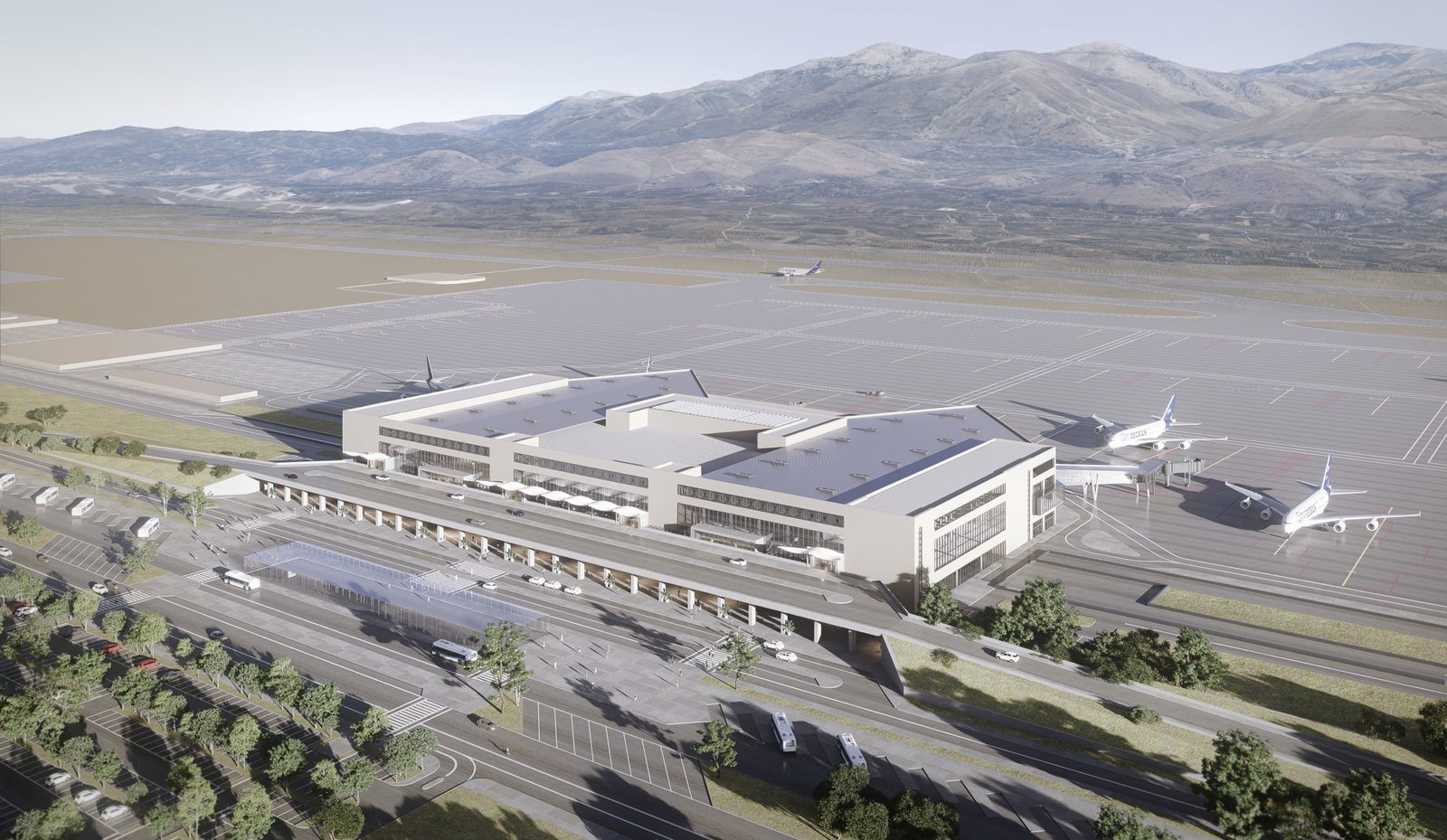
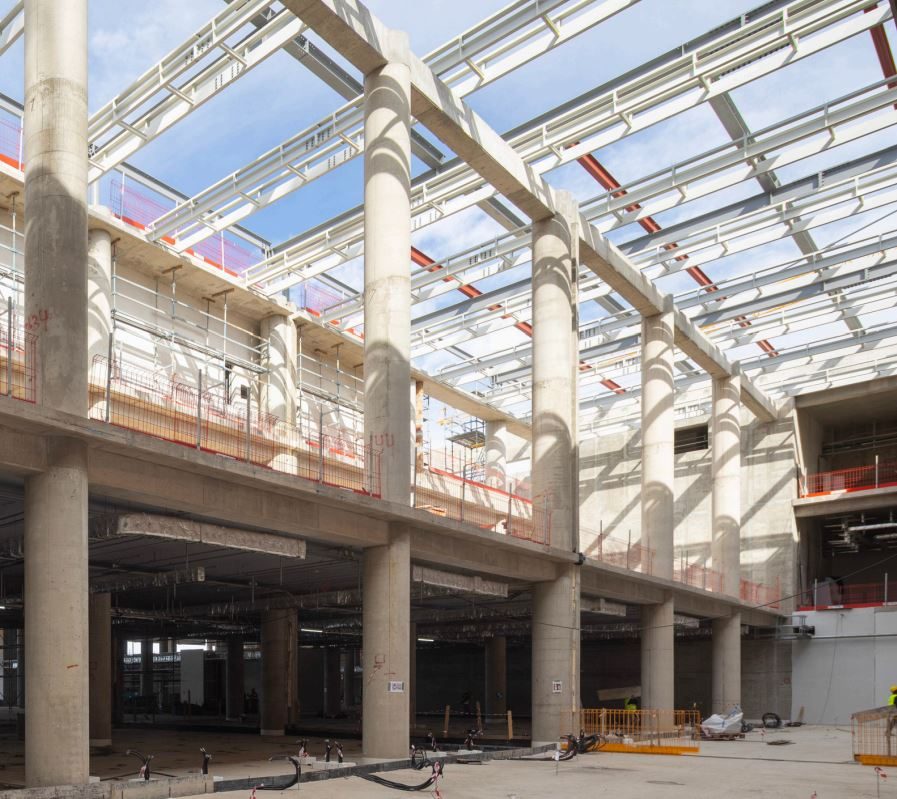
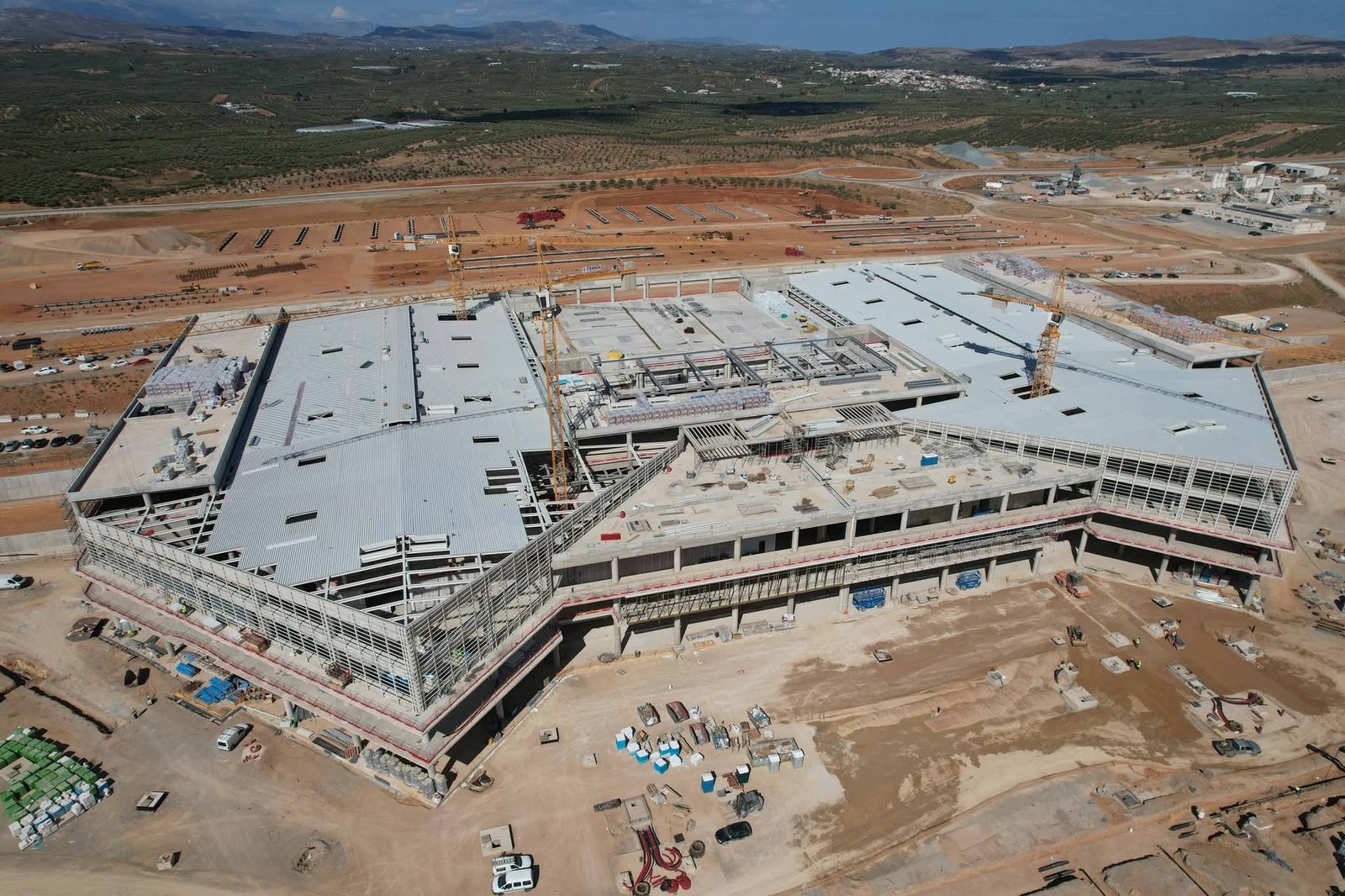
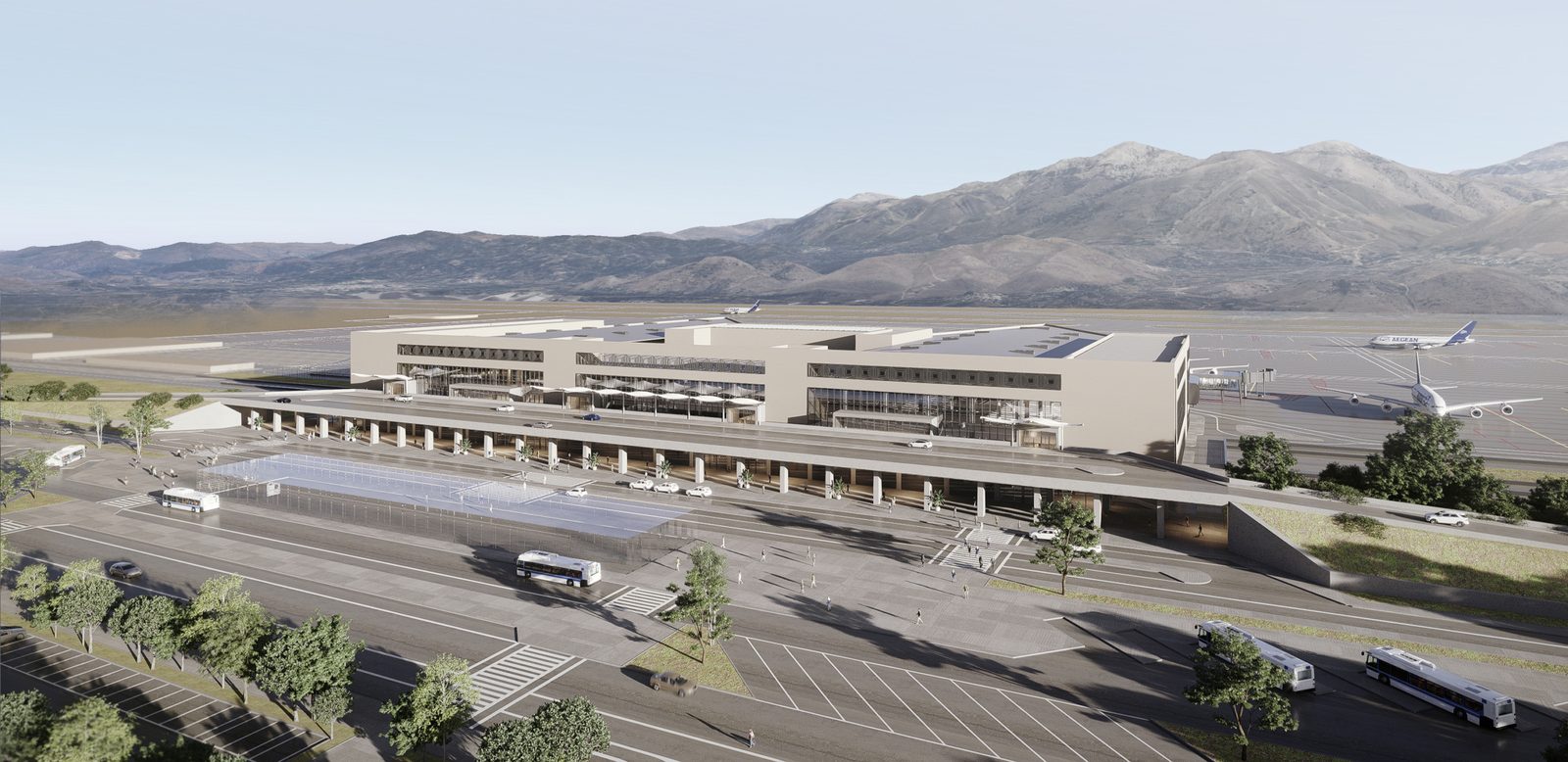
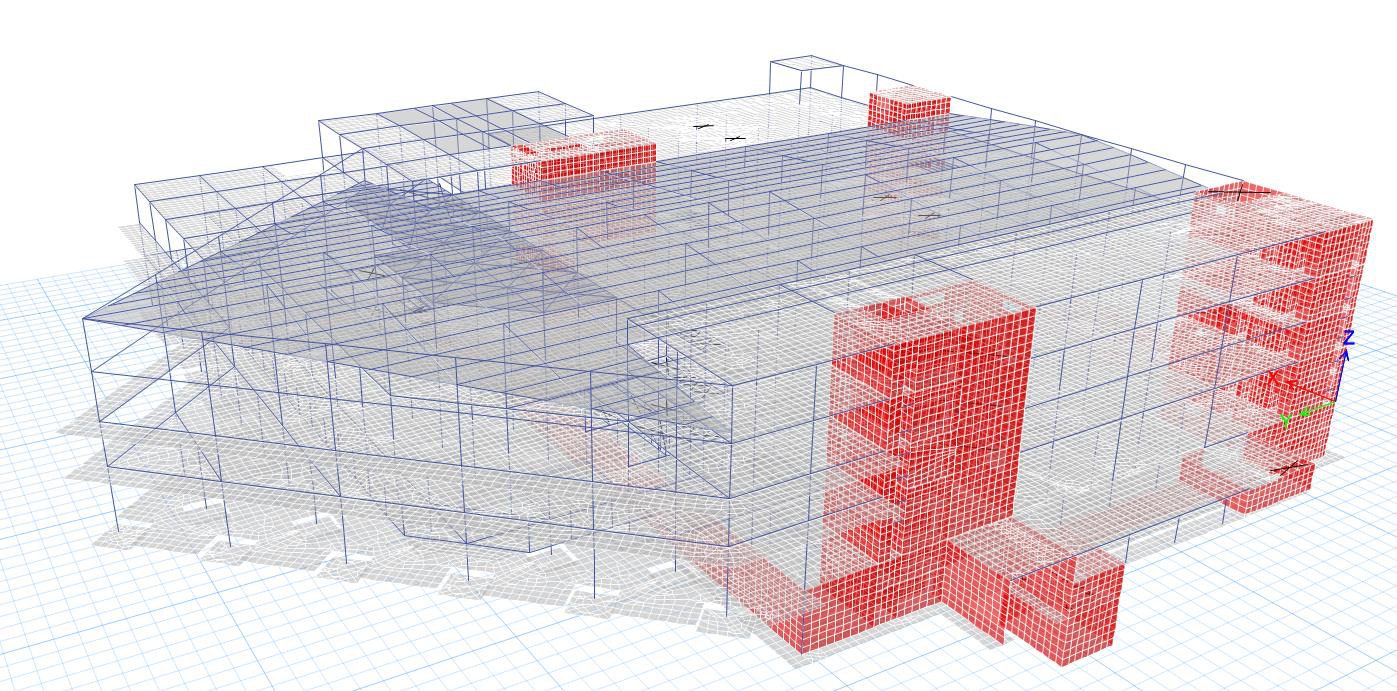
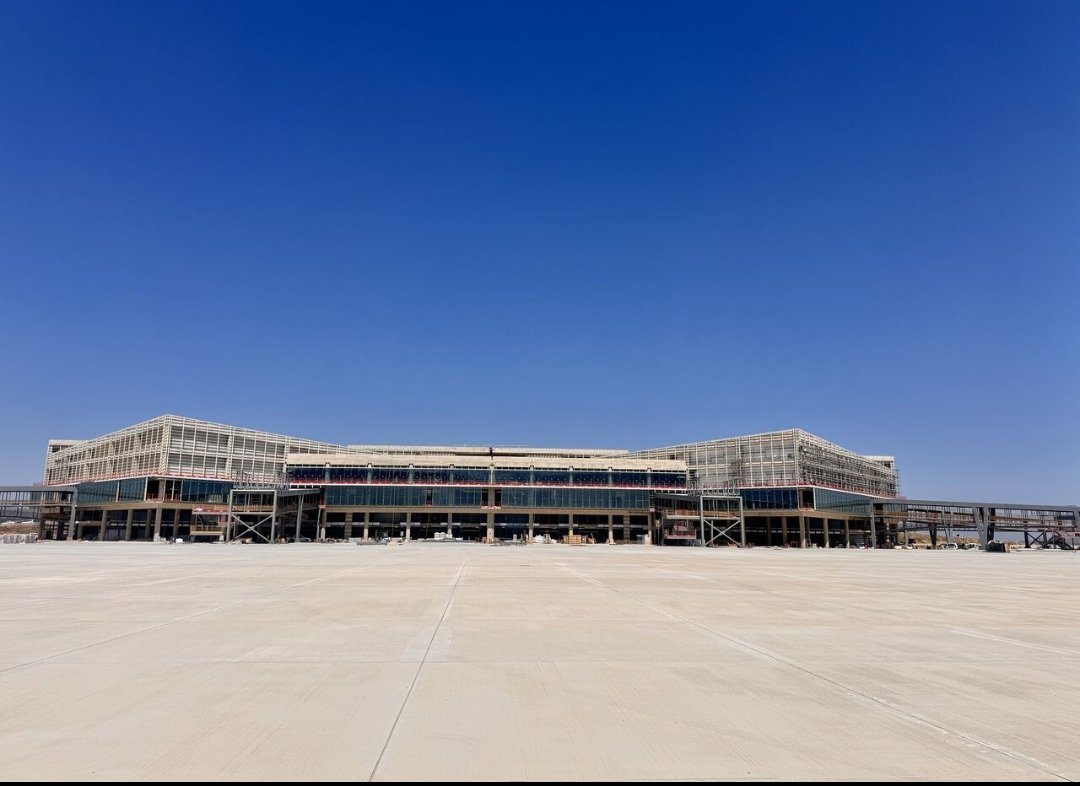
The Main Terminal measures 216 × 135 m in plan and rises 23 m, with a 7.5 m deep basement, arrivals at ground level, departures at +7.50 m, food-court and office levels, mezzanines and a plant level. A single seismic joint divides it into two symmetric structures. Lateral loads are carried by coupled reinforced-concrete core walls, while the Ø90 cm circular columns act as gravity members; the design spectrum envelopes the code spectrum for importance class III and a site-specific hazard study. Two double-pitched steel roofs span 18 m above the concrete frame.
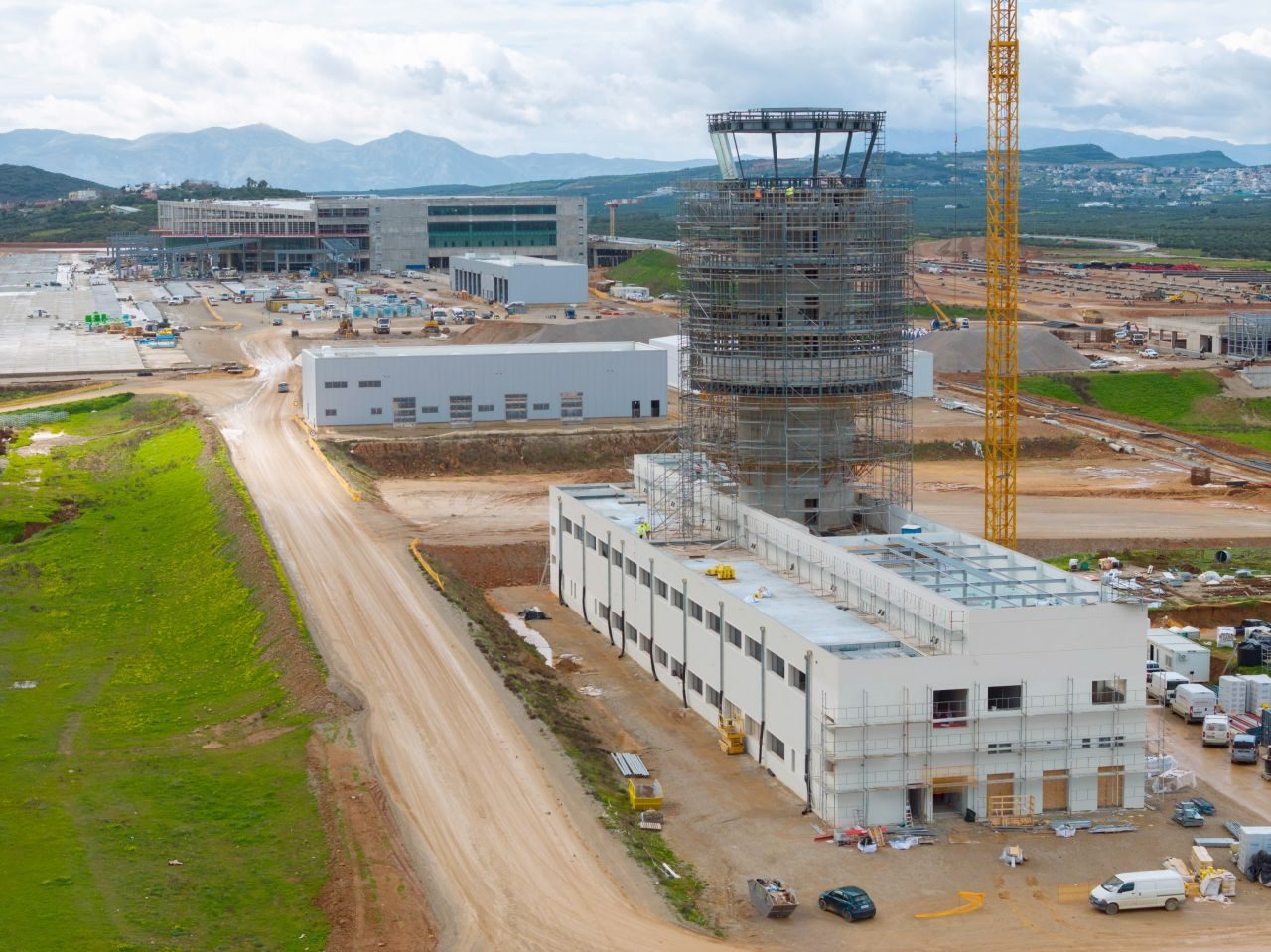
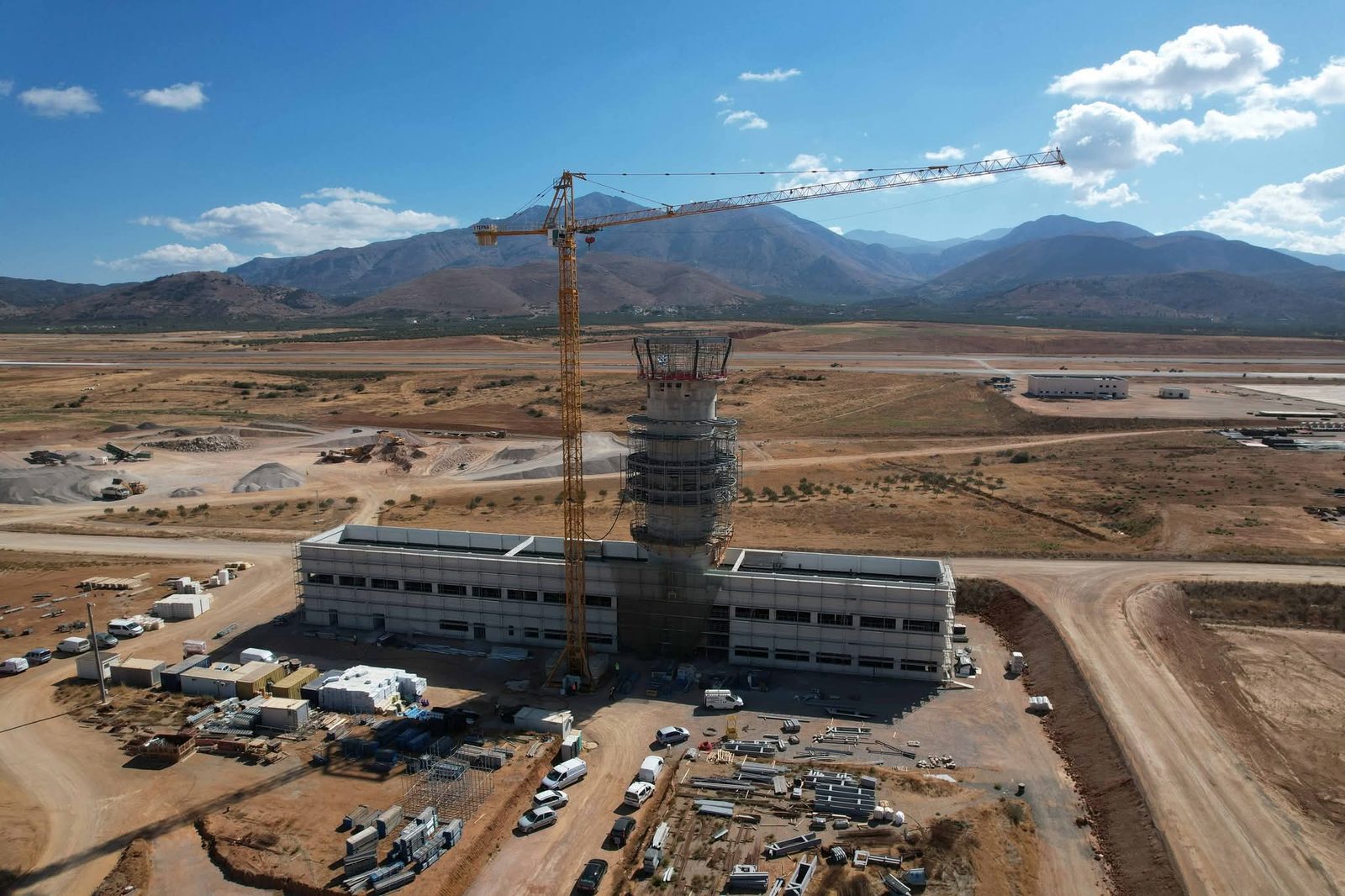
The control tower is a 9.45 m diameter concrete shaft with composite ring slabs, allowing the core to be cast with climbing formwork, topped by an unbraced steel cab that gives controllers an unobstructed view. Seismic joints with sliding supports separate the tower from its 92 m long podium.
Post-tensioned flat slabs – a first for Greece
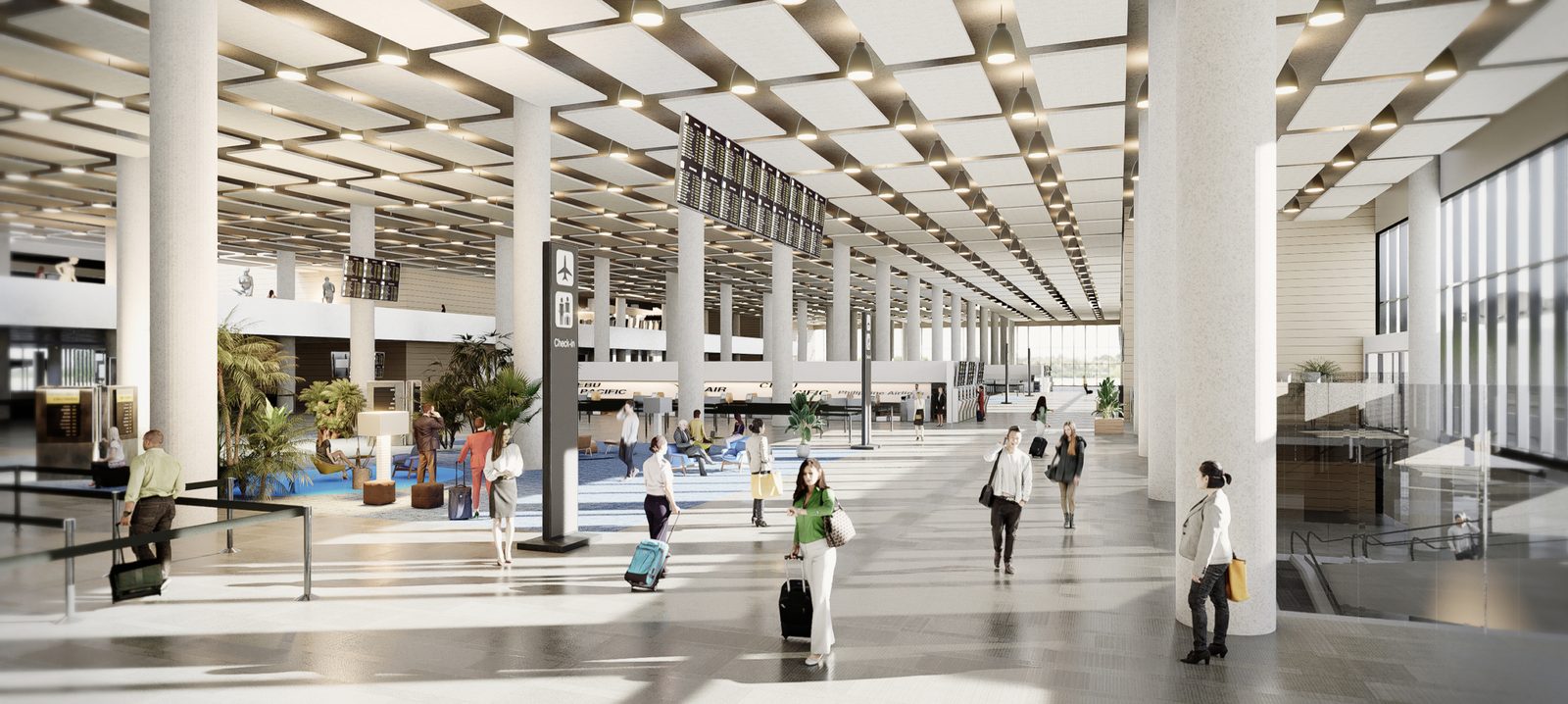
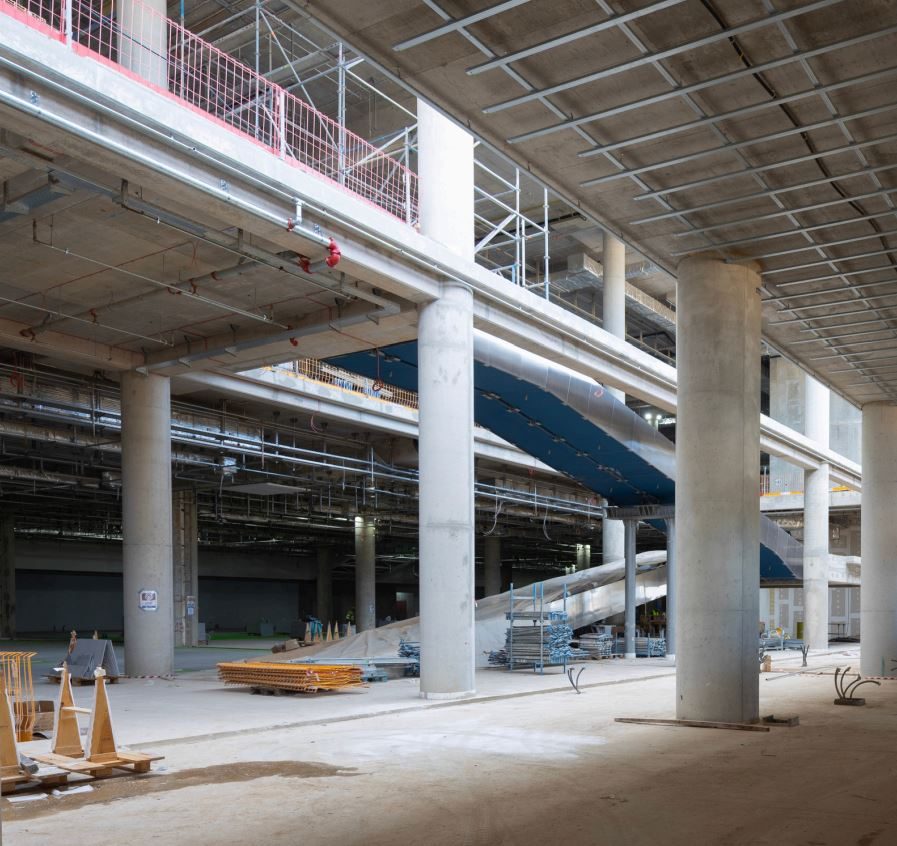
Penelis proposed replacing the original beam-and-slab scheme with post-tensioned flat slabs, and all main floors of the terminal were designed as bonded, two-way PT flat slabs with drop caps – the first application of its kind in Greece:
- 22 cm slabs (42 cm drop caps) on the 9 × 9 m grid and 30 cm slabs (60 cm drop caps) on the 9 × 15 m grid;
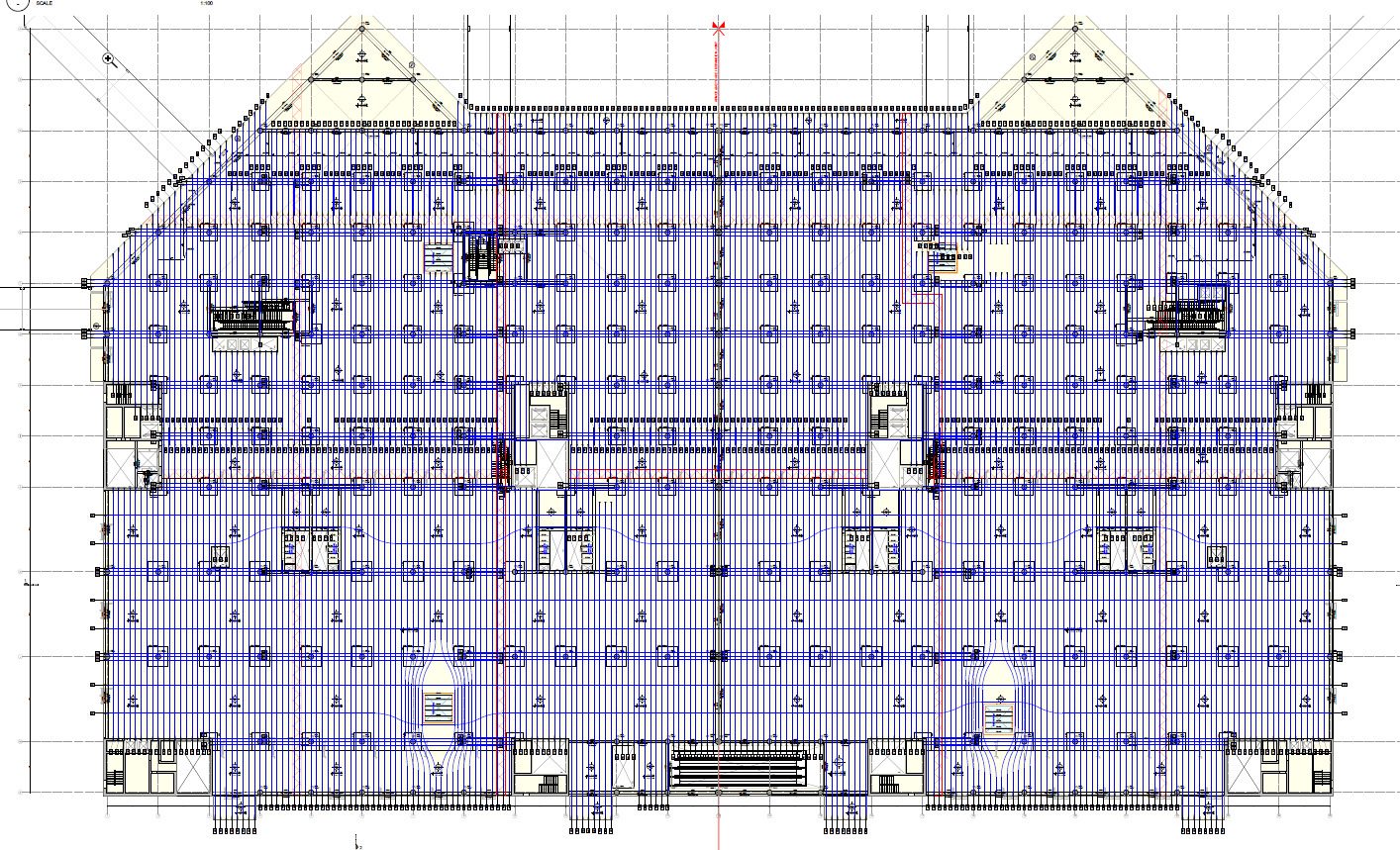
- tendons banded over the column lines in one direction and distributed at 1.0 m centres in the other;
- 15.2 mm strands in flat ducts, bonded after stressing.
The PT slabs gave thinner floors, large column-free bays and a clean soffit for the dense airport services. To control shrinkage over the very large floor plates, casting was organised in segments separated by 1.0–1.5 m closure strips, cast and stressed in a defined sequence. By January 2026 the project had reached 67% completion, and a 30,000 m² expansion of the terminal has been approved; the airport is targeted to enter operation in 2028.
Source: penelis.com